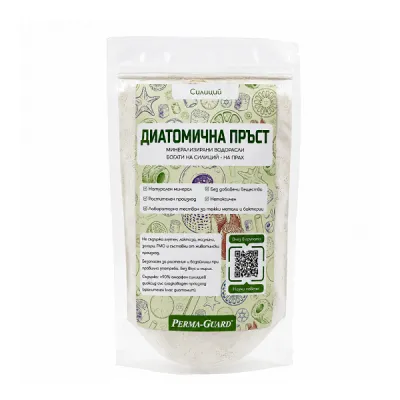
Diatomaceous Earth: Silica from Ancient Seas
What diatomaceous earth is, where its silica comes from and why its amorphous form matters. A natural mineral with an intriguing history and many uses.
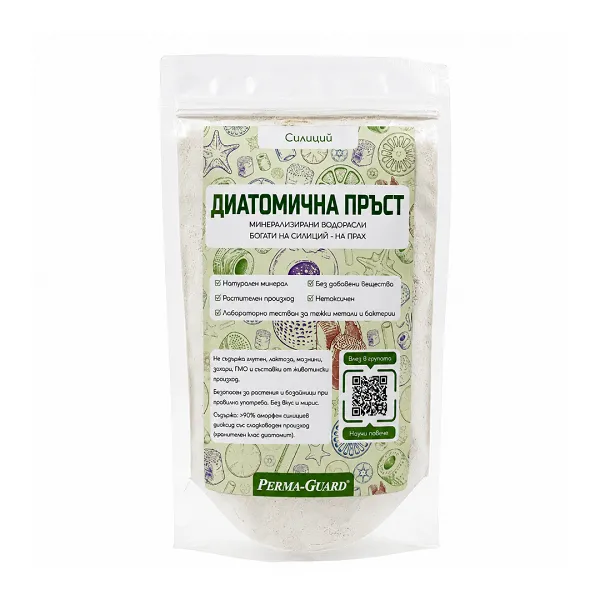
Diatomaceous earth (diatomite) is one of the most fascinating natural minerals, with a history millions of years long and uses ranging from cosmetics to the garden. This article looks at what it actually is, where its silica comes from and what to look for when choosing it.
What is diatomaceous earth?
Diatomaceous earth is a finely ground natural mineral made from the fossilised shells of diatoms (microscopic single-celled algae that lived in ancient freshwater basins). Over millions of years these shells settled and formed deposits of a white to greyish-beige powder.
Under the microscope the powder reveals a unique porous structure with an exceptionally large surface area, which gives it its characteristic absorbing and filtering properties.
Silica and connective tissue
Diatomaceous earth is a rich natural source of silica (silicon dioxide). Silicon is a trace element that in nature takes part in the formation of structural proteins such as collagen and elastin, which build the connective tissue of skin, hair, nails and joints.
Food-grade diatomite contains over 90% amorphous silicon dioxide. This is the form found in nature.
Why the difference between amorphous and crystalline form matters
When choosing diatomaceous earth, the most important distinction is between the amorphous and crystalline forms. Food-grade diatomite is mostly amorphous and contains less than 0.5% crystalline silicon dioxide. Industrial diatomite (for pool filters) is heat-treated and contains far more crystalline form and is not suitable for the same uses.
So always check that the product is food grade and tested for purity.
The story behind Perma-Guard
The Perma-Guard brand is among the established diatomaceous earth producers with decades of experience. Every batch is lab-tested for purity and heavy metals, and the raw material comes from selected deposits with a high content of amorphous silica.
How to use it
Internally: the label recommends half a measuring spoon (about 1.5 g) a day dissolved in a glass of water, gradually increasing to one measuring spoon (about 3 g). Drink plenty of water.
Externally (cosmetic): mix about a tablespoon of powder with a little water into a paste, apply to the face for 1–2 minutes as a gentle exfoliant and rinse off with lukewarm water.
Household uses: thanks to its absorbing structure, diatomaceous earth is also used to absorb odours (e.g. in the fridge) and in the garden.
Important to know
Diatomaceous earth is a natural mineral and is not a food, medicine or food supplement. Avoid inhaling the powder and contact with the eyes. Store in a dry place, out of reach of children. If in doubt, or if you have chronic conditions, consult a health professional before use.
Products in this article